
Washington Parish Criminal Court Cases
The Twenty-Second Judicial District Court has original jurisdiction over state criminal matters in Washington and St. Tammany parishes. Washington Parish felony and non-felony proceedings are heard at the courthouse in Franklinton. Divisions A through J share criminal jurisdiction through random assignment and calendar rotations. The clerk, rather than the judge or sheriff, keeps the filed criminal case record.
Misdemeanor Court sits in the Washington Parish Courthouse at least three times each month, with lobby signs showing the room used that day. Municipal courts handle some ordinance, traffic, and fine-level matters within city limits. That split matters because a parish clerk search may not find a city citation or municipal bench warrant. Start by asking which court accepted the charging paper.
The 22nd JDC courthouse overview shows the district's two-parish jurisdiction.
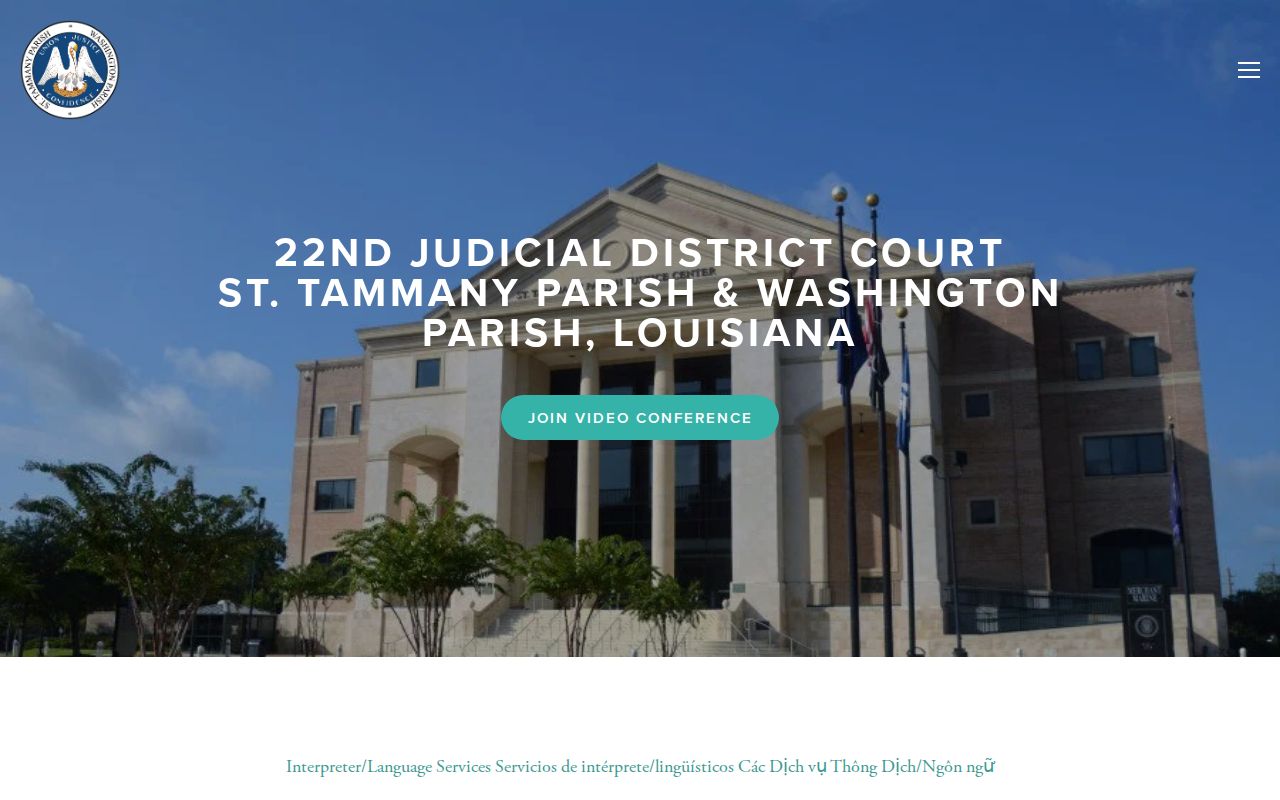
That jurisdictional map helps separate a Washington Parish district case from a municipal or federal proceeding.
Washington Parish Clerk Name Search
The Washington Parish Clerk of Court is the first contact for a filed district case. The criminal desk is at 908-B Washington Street in Franklinton and can be reached at 985-839-4663. Give the full name, an approximate year, and the case number when known. The published schedule lists a $20 criminal name search. Confirm all charges before ordering copies or certification.
The clerk homepage identifies the local custodian.
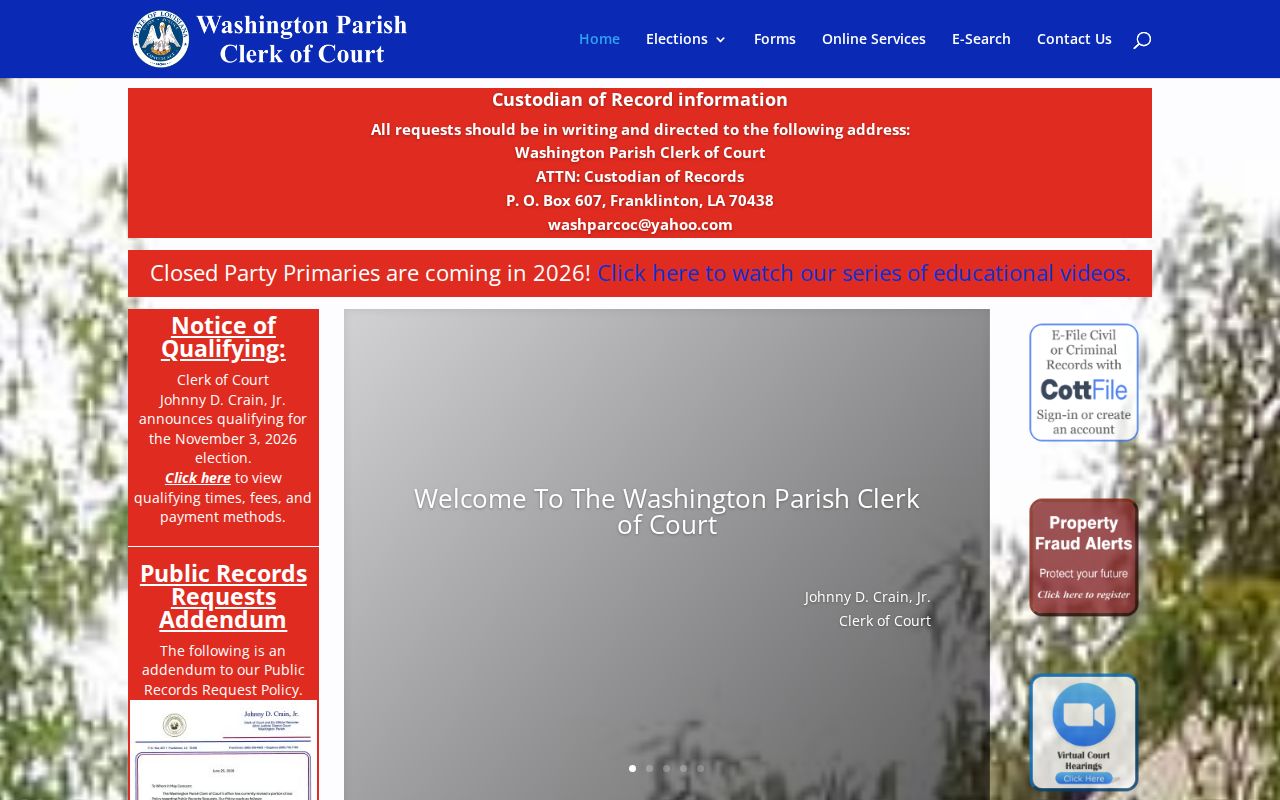
Use that contact when a calendar does not disclose the underlying docket.
Criminal Case Clerk
908-B Washington St.
Franklinton, LA
985-839-4663
Criminal fax: 985-839-7271
Searching Washington Parish Case Records
Louisiana has no single free and complete statewide search for trial-level criminal cases. The clerk's online-services page links CottFile for criminal e-filing. It does not advertise CottFile as a free public defendant-name lookup. For a reliable result, inspect the register or docket through the Washington Parish Clerk, then order the exact filing needed.
- Identify district or municipal court from the citation, charging paper, or agency information.
- Call or visit the clerk with the case number, full defendant name, and approximate filing year.
- Ask for the register or docket before ordering a full file.
- Read the filings and minute entries to find the actual disposition.
- Request the needed copy or certified disposition and confirm the price.
| Search Field | Format | Required? | Use |
|---|---|---|---|
| Case number | Clerk docket number | No, if name is known | Best identifier for one file |
| Defendant name | Full legal name | Yes for name search | Ask clerk to check possible matches |
| Approximate year | Four-digit year | No | Narrows archived and common-name results |
| Court type | District or municipal | No | Routes the request to the right custodian |
The online-services screen shows remote filing and linked clerk services.
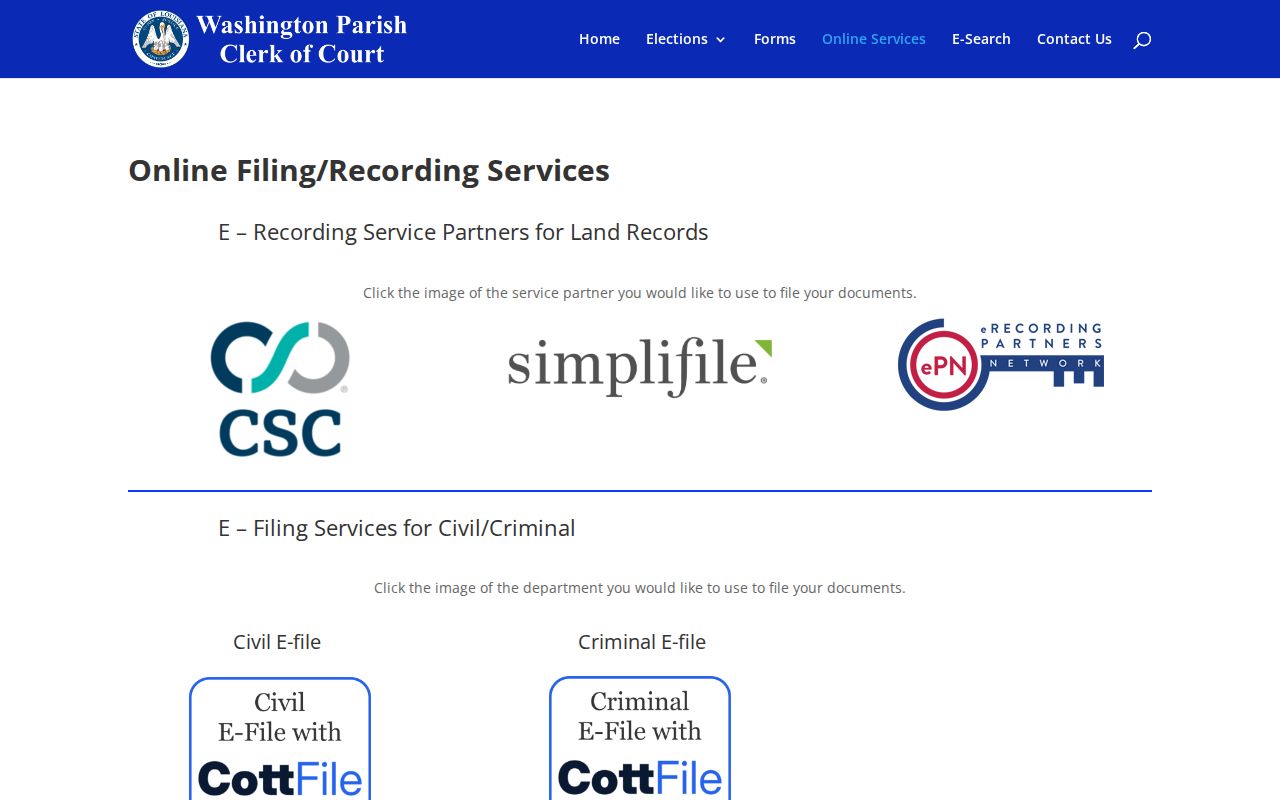
Its CottFile link should not be described as an open public criminal name database.
Calendar Is Not a Washington Docket
The 22nd JDC court calendar uses terms such as Washington Parish arraignments, revocations, criminal motions, jury-trial weeks, and pretrial settings. Those labels show scheduled work. They do not reveal the full filing history, current charge, plea, judgment, or sentence for a named person. Dates can also change after a closure or reset.
The official calendar controls display schedule categories rather than a case-file search.
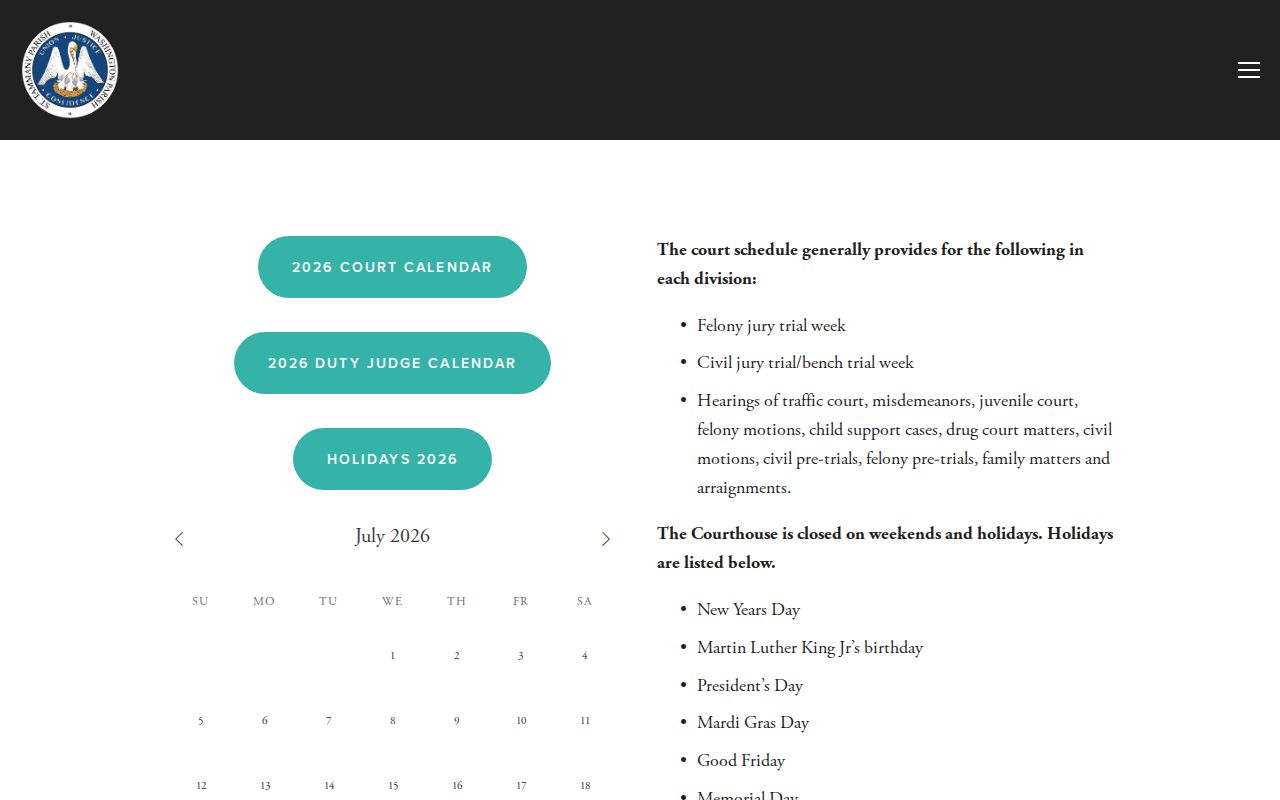
Use the calendar to confirm a session, then use the clerk's docket for facts and documents.
Inside a Washington Parish Case File
A criminal case file centers on the charge the prosecutor filed, not merely the offense written at booking. Ask for the register or docket, bill of information or indictment, minute entries, disposition, judgment, sentence, and any public expungement order. Archived records may need retrieval time, while availability and price must be confirmed with the clerk.
| Case Number & Court | Docket identifier, filing date, division, and status. |
|---|---|
| Charging Document | Filed counts, statutes, grades, and bill of information or indictment. |
| Docket Entries | Filings and courtroom events in date order. |
| Hearing Dates | Arraignment, motion, pretrial, trial, sentencing, and revocation settings. |
| Disposition & Judgment | Plea, verdict, dismissal, nolle prosequi, acquittal, or other result. |
| Sentence & Conditions | Custody, probation, fines, costs, restitution, and sentence structure. |
A booking charge may differ from the filed charge because the district attorney decides what to prosecute. Compare the court record with the Washington Parish arrest lookup instead of treating them as duplicates.
Minute entries deserve special care. A setting may show that a hearing was planned, while a later entry may record a continuance, plea, dismissal, or failure to appear. Financial fields can list bond, fines, costs, restitution, and a balance, but access depends on what the clerk can lawfully release. Ask for the judgment and sentence when the final outcome matters. Those signed records carry more weight than an isolated calendar label or an old booking description.
District or Municipal Court?
Washington Parish criminal court cases do not all enter one system. The 22nd JDC hears district felony and misdemeanor charges. A municipal court may retain a city ordinance matter, traffic citation, fine, or related bench warrant. If the district clerk finds no file, ask the issuing agency which court appears on the document. Do not assume that a courthouse name search reaches every city docket.
The 22nd JDC other-courts page explains misdemeanor and Bond Court functions.
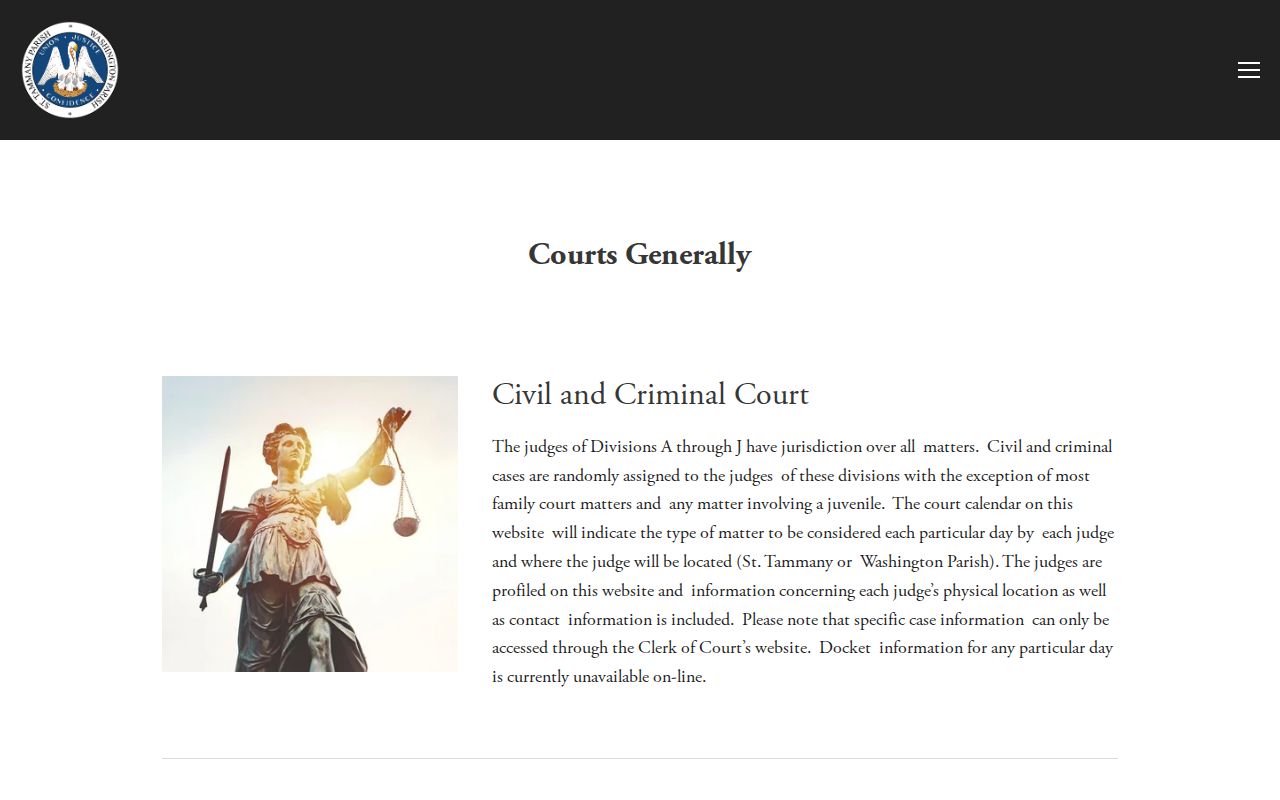
Its distinctions show why court level is a key search detail, even when the same event is involved.
How a Criminal Case Moves
After arrest and booking, a judge addresses probable cause, initial appearance, and bond. The prosecutor may file a bill of information or seek an indictment. Arraignment records the plea. Motions, negotiation, and trial preparation follow. The matter can end through plea, trial, dismissal, acquittal, or another lawful disposition. A conviction leads to sentencing and may lead to appeal or supervision.
Case flow: Charges Filed → Arraignment → Pretrial → Plea or Trial → Disposition → Sentencing
- Arraignment
- The hearing where the filed charge is read and a plea is entered.
- Nolle prosequi
- The prosecutor's formal choice not to continue a charge at that time.
- Capias
- A court order directing custody, often tied to a failure to appear.
- Disposition
- The result of a charge or case.
Each stage can create a separate minute entry. A scheduled date does not prove that the hearing occurred or reveal its result.
Washington Court Intervention Screening
Court Intervention Services offers voluntary screening for qualifying Washington and St. Tammany residents who are in jail or on bond. Screening addresses mental health, substance use, and veteran status. A prosecutor, defense lawyer, judge, or referral form may begin the process. Acceptance into screening does not decide guilt or the criminal case outcome.
Published exclusions include violent offenses under R.S. 14:2, arson, sex offenses, no-bond status, probation or parole holds, and fugitive status. Bond Court began in 2001 around drug screening as a bond condition and expanded with grant support in 2018. Specialty options include Drug Court and Re-Entry Court, though current Washington Parish availability should be verified before relying on a referral.
The CIS reference to screening around a 72-hour hearing should not be converted into a universal deadline for every case. It describes a program opportunity. The court docket remains the source for what happened in one Washington Parish matter, and counsel or the clerk can clarify an entry that does not explain the referral result.
Washington Parish Copies and Certification
The clerk's schedule separates search work, copies, and certification. Ask for a quote before ordering a large or archived file. A certified disposition is often the most useful single document when someone needs to show how their own charge ended or correct a missing Louisiana repository outcome.
The official clerk fee schedule supplies current court-record charges.
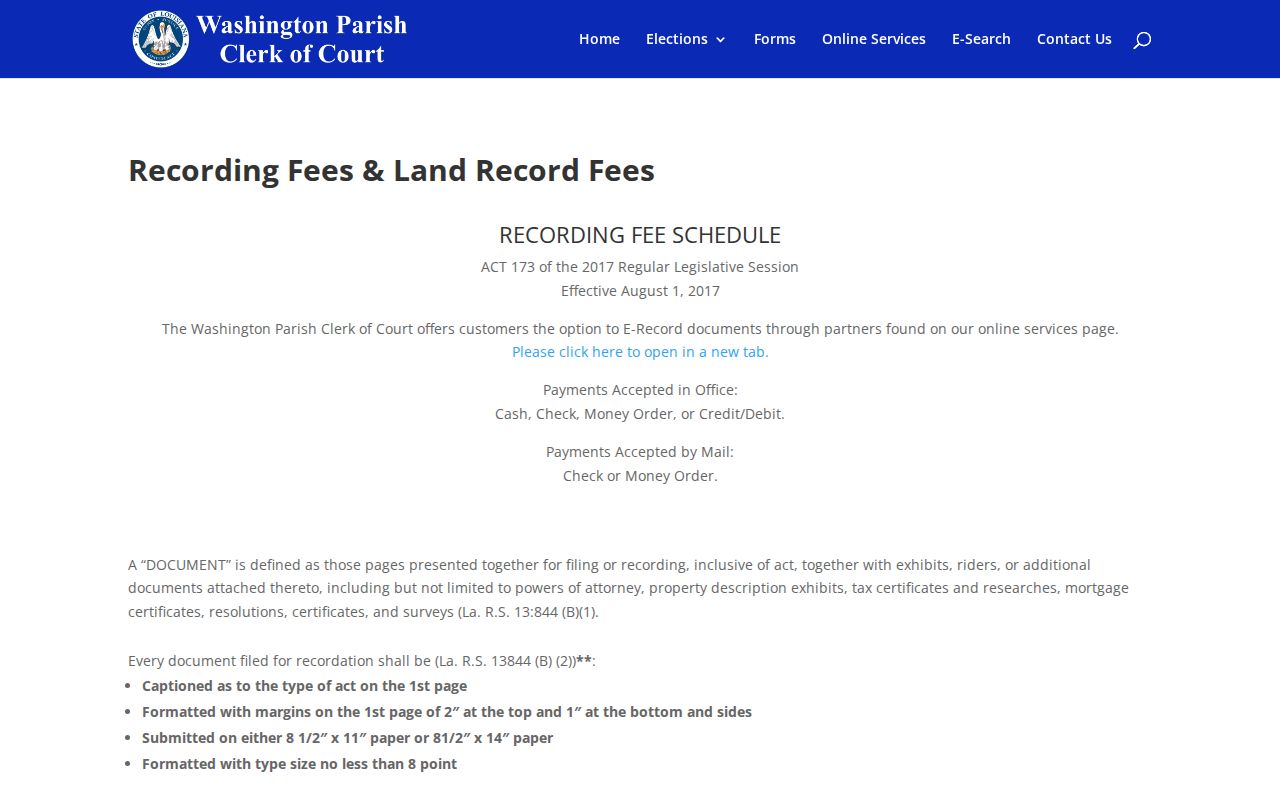
Confirm the total, certification need, delivery method, and retrieval time directly with the clerk.
Case Record Access & Restrictions
The Louisiana Public Records Law supports access to custodian-held records, subject to specific limits. Adult court files differ from the closed LACCH repository governed by R.S. 15:587. Request the filed case from the clerk, not from the parish government's general form, which excludes law-enforcement records.
Juvenile matters, sealed or expunged content, victim and minor information, Social Security numbers, medical data, and protected addresses can be withheld or redacted. Louisiana expungement removes eligible material from ordinary public access but does not promise destruction in every system. If a public result conflicts with a certified judgment, keep the certified disposition and use the correction process of the agency displaying the error.
Record boundary: A court file shows what was filed and decided. It is not a full rap sheet, police report, or jail history.